
Confessions
of a Chironomid Addict
with
Brian Chan
After 25
years of fishing the rich trout lakes of the Southern Interior region
of British Columbia, there is no question as to what hatch I look forward
to the most. The excitement begins building in late February, long before
any lakes are ice free, but that is when chironomids begin hatching off
the South Thompson River and adults land on my office window. I know we
will be fishing chironomids on our favourite lakes in less than 2 months.
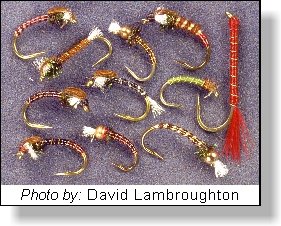
Chironomids
or midge fishing is a pleasant, aesthetically pleasing way to fly fish.
Cast out a floating fly line with a pupal pattern, wait for it sink to
the appropriate depth, begin a slow hand twist retrieve and pause regularly
to take in the scenery around you. Then watch or feel your fly line move
slightly or take off and another trout is fooled. It sounds easy and it
is, once you understand the chironomid life cycle and when and where trout
feed on them.
Not only
are chironomids the first major insect hatch of the year, they continue
to emerge in lessor numbers right up until freeze up. Chironomids are
members of the dipteran order of insects, true flies having only one set
of complete wings. Adult chironomids are similar in appearance to adult
mosquitoes except they have plumose or feathery antennae and the female
chironomid does not bite. Adult chironomids will range in size from 2
mm to 20 mm in length.

Chironomid
Life cycle
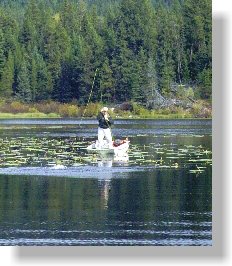 The
chironomid life cycle includes egg, larva, pupa and adult stages. The
life cycle begins when females return en masse to the lake to deposit
eggs. Typically, eggs are released as the female dips the tip of her abdomen
in the surface film while flying low over the water. The eggs sink to
the bottom and within 2 weeks hatch into the larva. The chironomid larva
is worm-like in appearance with distinct body segmentation. Larvae live
in the bottom or benthic areas of the lake in tubes constructed perpendicularly
at the bottom/water interface. Larvae feed on detritus and can leave their
tubes to forage but since they are poor swimmers spend most of their time
in the tube intercepting drifting food. Chironomid larvae are often referred
to as "bloodworms" because of their blood red colouration. This colouration
is a result of living in poorly oxygenated water typically associated
with deeper depths. A hemoglobin-like substance which is maroon in colour
enables the larvae to survive in such oxygen poor environments. Other
larval colours include shades of green and dark brown. Once the larva
is fully developed it will seal itself in the tube and transform into
the pupal stage. It usually takes several weeks for the change to occur.
The pupa then cuts its way out of the old larval tube and with the aid
of trapped gases under the thorax and abdomen, rises slowly to the surface
of the lake. Common pupal colours are black and various shades of green,
brown, orange and maroon. The majority of chironomids pupate or hatch
from shallower depths of from 1 to 6 meters deep. It is the pupal ascent
that attracts the attention of trout. Upon reaching the surface, a split
forms along the back of the thorax and the adult chironomid crawls out
and flies off. Mating occurs within a day of hatching and the cycle is
completed. The
chironomid life cycle includes egg, larva, pupa and adult stages. The
life cycle begins when females return en masse to the lake to deposit
eggs. Typically, eggs are released as the female dips the tip of her abdomen
in the surface film while flying low over the water. The eggs sink to
the bottom and within 2 weeks hatch into the larva. The chironomid larva
is worm-like in appearance with distinct body segmentation. Larvae live
in the bottom or benthic areas of the lake in tubes constructed perpendicularly
at the bottom/water interface. Larvae feed on detritus and can leave their
tubes to forage but since they are poor swimmers spend most of their time
in the tube intercepting drifting food. Chironomid larvae are often referred
to as "bloodworms" because of their blood red colouration. This colouration
is a result of living in poorly oxygenated water typically associated
with deeper depths. A hemoglobin-like substance which is maroon in colour
enables the larvae to survive in such oxygen poor environments. Other
larval colours include shades of green and dark brown. Once the larva
is fully developed it will seal itself in the tube and transform into
the pupal stage. It usually takes several weeks for the change to occur.
The pupa then cuts its way out of the old larval tube and with the aid
of trapped gases under the thorax and abdomen, rises slowly to the surface
of the lake. Common pupal colours are black and various shades of green,
brown, orange and maroon. The majority of chironomids pupate or hatch
from shallower depths of from 1 to 6 meters deep. It is the pupal ascent
that attracts the attention of trout. Upon reaching the surface, a split
forms along the back of the thorax and the adult chironomid crawls out
and flies off. Mating occurs within a day of hatching and the cycle is
completed.


Fishing
Strategies
Basically,
trout select chironomids in the following situations :
- as larvae
in or caught out of their protective tubes
- as pupae
ascending to the surface
- as the
adult emerging from the pupal case
- as females
return to lay eggs
Chironomid
larval imitations are best fished close to the bottom of the shoals or
drop-off areas(generally less than 6 meters deep) as this is their prime
habitat. A floating fly line and varying leader lengths (3 to 7 meters)
will allow effective coverage of these shallower depths. It is very important
to allow the fly enough time to reach the depth zone you want to fish
before beginning the retrieve. Weight your larval pattern or add soft
putty lead to a tippet knot to get down to the bottom quicker. Larval
patterns should be retrieved very slowly or allowed to drift in the wind.
It's always good to intersperse an occasional quick pull to imitate the
twitching motion.
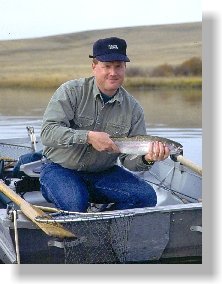 It's
the pupal ascent that really gets fish and fly fishers excited. A typical
chironomid emergence would see literally thousands of pupae rising to
the surface. Individual trout inhale hundreds by just swimming through
the water column. Over the years of fishing chironomids, I have found
that the major hatches occur between 10 A.M. and 3 P.M. Remember that
chironomids can be hatching in very deep water. It is not uncommon to
be anchored in 12 meters of water and successfully fishing pupal patterns.
The majority of hatches do occur in shallower water (3 to 5 meters deep).
These emergences allow the use of floating lines and varying leader lengths.
You want to be able to cover the entire depth zone you are fishing. The
floating fly line acts as a long bobber. The key to successfully fishing
this technique is to allow sufficient time for your pupal imitation to
sink to the desired depth before beginning your retrieve. Use the countdown
method to determine where your fly is in relation to the bottom of the
shoal. Let's suppose you are anchored in 5 meters of water and fishing
with a 6 meter long leader and weighted pupal pattern. Try waiting 90
seconds before beginning the retrieve. If you snag bottom weeds during
the retrieve, reduce the amount of time waited on the next series of casts.
If you do not get any strikes fishing close to the bottom then further
reduce the wait time before starting to retrieve. This method allows you
to cover all possible depth zones that the trout may be feeding in. How
slow is a chironomid pupa retrieve? It may take 10 minutes to retrieve
a 20 meter long cast! I prefer to use a hand twist retrieve as it keeps
my hands busy. The biggest mistakes made when fishing chironomids with
a floating line are 1) not waiting long enough for the fly to sink, and
2) retrieving much to fast. Remember, the pupa does not swim to the surface
but rises ever so slowly. It's
the pupal ascent that really gets fish and fly fishers excited. A typical
chironomid emergence would see literally thousands of pupae rising to
the surface. Individual trout inhale hundreds by just swimming through
the water column. Over the years of fishing chironomids, I have found
that the major hatches occur between 10 A.M. and 3 P.M. Remember that
chironomids can be hatching in very deep water. It is not uncommon to
be anchored in 12 meters of water and successfully fishing pupal patterns.
The majority of hatches do occur in shallower water (3 to 5 meters deep).
These emergences allow the use of floating lines and varying leader lengths.
You want to be able to cover the entire depth zone you are fishing. The
floating fly line acts as a long bobber. The key to successfully fishing
this technique is to allow sufficient time for your pupal imitation to
sink to the desired depth before beginning your retrieve. Use the countdown
method to determine where your fly is in relation to the bottom of the
shoal. Let's suppose you are anchored in 5 meters of water and fishing
with a 6 meter long leader and weighted pupal pattern. Try waiting 90
seconds before beginning the retrieve. If you snag bottom weeds during
the retrieve, reduce the amount of time waited on the next series of casts.
If you do not get any strikes fishing close to the bottom then further
reduce the wait time before starting to retrieve. This method allows you
to cover all possible depth zones that the trout may be feeding in. How
slow is a chironomid pupa retrieve? It may take 10 minutes to retrieve
a 20 meter long cast! I prefer to use a hand twist retrieve as it keeps
my hands busy. The biggest mistakes made when fishing chironomids with
a floating line are 1) not waiting long enough for the fly to sink, and
2) retrieving much to fast. Remember, the pupa does not swim to the surface
but rises ever so slowly.
Sometimes
the trout will only feed on the pupa at a very precise or narrow depth
zone in the water column. This is when a strike indicator works as it
will maintain your pupal pattern at a precise depth. Make sure you don't
take your eyes off the indicator as the strike can be very subtle
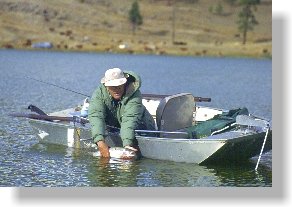 Intermediate
sinking lines which are the slowest sinking lines made are also effective
for fishing chironomid larvae and pupae. The very slow sink rate in combination
with a slow hand twist retrieve will allow effective coverage of specific
depth zones. A chironomid hatch occurring over deeper water (more than
8 meters) can be fished with full sinking lines. One of my favourite techniques
is to use an extra-fast sinking line and cast it out only as far as the
depth I am anchored. Allow the fly line to sink until straight up and
down and then begin a very slow hand twist retrieve right to the surface
of the lake. One word of caution, trout hit the deep water chironomid
hard so be prepared for the rod to be almost yanked out of your hand! Intermediate
sinking lines which are the slowest sinking lines made are also effective
for fishing chironomid larvae and pupae. The very slow sink rate in combination
with a slow hand twist retrieve will allow effective coverage of specific
depth zones. A chironomid hatch occurring over deeper water (more than
8 meters) can be fished with full sinking lines. One of my favourite techniques
is to use an extra-fast sinking line and cast it out only as far as the
depth I am anchored. Allow the fly line to sink until straight up and
down and then begin a very slow hand twist retrieve right to the surface
of the lake. One word of caution, trout hit the deep water chironomid
hard so be prepared for the rod to be almost yanked out of your hand!
At other
times trout will take the pupa just under or in the surface film. The
angler will see subtle head and tail or slow bulging riseforms in this
situation. Shorten your leader to approximately 4 meters, grease it well
to make it float and fish a pupal pattern as close to the surface as possible.
Trout will
sometimes feed on the egg laying adult chironomid. Females typically return
to the lake in the evenings when winds are down and darkness approaches.
In most situations, individual trout will show a distinct movement or
feeding pattern which will allow you to anticipate its speed and direction
of travel. Cast an adequate distance ahead of the fish with a floating
adult pattern. As soon as the fly hits the water give it a couple of long
fast strips so that it forms a wake on the water, then let it sit for
a few seconds before repeating the fast strips.
Whatever
techniques you use for fishing the chironomid larva and pupa it is important
to have complete control over your fly line so that strikes are not missed.
It is essential to double anchor your boat (bow and stern) so that changes
in wind direction will not swing you from side to side or in circles.
Float tubers or pontoon boat anglers should have one anchor out the back
and then use their swim fins to control unwanted sideways motion.
In the Southern
Interior, chironomid hatches are usually in full swing by the second week
of May. Lower elevation lakes like Stump and White can have good hatches
coming off by mid-April. As the season progresses, chironomid addicts
fish higher and higher in elevation to prolong the enjoyment of this most
exciting hatch.
Brian Chan
riseform@shaw.ca
Brian's
Articles...
|